When delving into the complexity and variability of the financial world, it becomes evident that all economic activities and phenomena are rooted in some fundamental human constraints and needs. This article will explore four constraints and explain how these constraints shape the principles of economics and economic systems.
- Scarcity of Resources
- Finiteness of Life
- Dependence on Institutions
- Necessity for Coordination
Table of ContentsShowHide
- 1Four Constraints and Corresponding Economic Theories
- 2Scarcity of Resources: Desires, Scarcity, and Competition
- 3Finiteness of Life: The Impacts of Time Cost and Future Uncertainty
- 4Dependence on Institutions: Examining the Relationship Between Individuals and Society
- 5Necessity of Coordination: The Evolution and Impact of Money to Policy
- 6Conclusion: Analyzing Financial and Economic Phenomena Through Four Dimensions
Four Constraints and Corresponding Economic Theories
- Scarcity of Resources - Law of Supply and Demand: In a world filled with infinite needs and finite resources, the lack of resources becomes a constraint. The law of supply and demand is born out of this constraint. For instance, prices rise as the need for a product increases, motivating producers to increase supply.
- Finiteness of Life - Theory of Interest: Time is finite. When we lend money, we expect more in return in the future. For example, a person might be willing to lend $100, hoping to return $110. This extra $10 is interesting, reflecting the value of time.
- Dependence on Institutions - Institutional Theory: We live in a highly interdependent world. The institutional theory examines how we organize economic activities and social relations. For example, markets and price mechanisms are the primary resource allocation means under the capitalist system.
- Necessity for Coordination - Macroeconomics: Whether it's central banks adjusting the money supply to control inflation or governments using fiscal policy to stimulate economic growth, these are manifestations of coordination. For example, during an economic slowdown, the central bank might lower interest rates to encourage consumption and investment.
These four constraints are not isolated; they influence each other and shape our economic world. These constraints and corresponding economic theories help us understand phenomena, predict changes, and guide future strategies and decisions. As we explore and create different economic systems and policies, we always operate within the framework of these fundamental human constraints.
Scarcity of Resources: Desires, Scarcity, and Competition
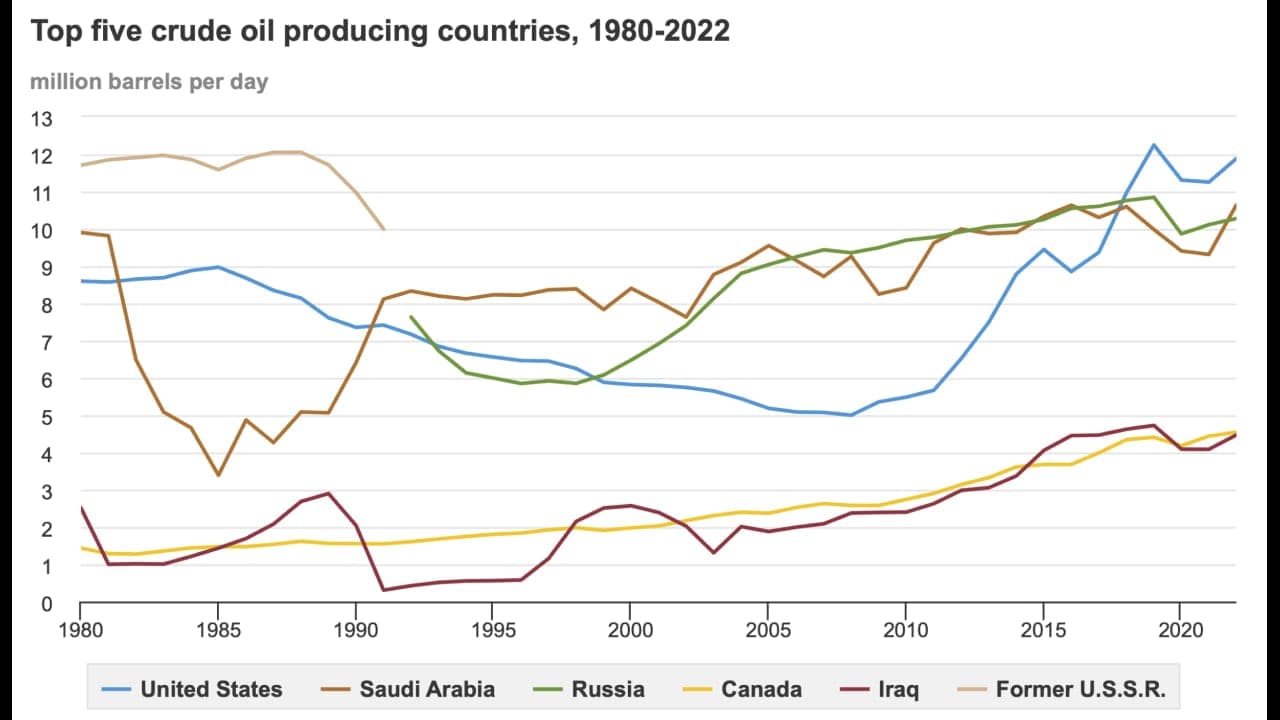
Source: eia.gov – Top five crude oil producing countries, 1980-2022
Related Articles:
The stage of contemporary economics is painted by the interplay of infinite human desires and the scarcity of resources. Every economic decision, market dynamics, and even the fluctuations in asset prices result from these two fundamental elements interacting.
Human desires are insatiable, ranging from fundamental survival needs to advanced spiritual pursuits. For example, once people have met their basic food needs, they seek more exquisite cuisine and a more prosperous cultural and entertainment life. This process is constantly upgrading and expanding.
Scarcity is not just about limited resources; our boundless desires amplify it. Consider the global race for rare earth elements essential in making smartphones, electric cars, and other tech. As demand skyrockets, the scarcity of these elements becomes more pronounced.
Competition becomes inevitable at this level, as everyone vies for limited resources to satisfy their endless wants, giving rise to the law of supply and demand. In the crude oil market, for instance, the dynamics of supply and demand are constantly changing, influencing fluctuations in oil prices.
Different rules of competition lead to other economic behaviors and outcomes. The bargaining mindset of both supply and demand is crucial to asset price formation. For example, the price of crude oil is influenced not only by demand (the market's consumption needs) but is also constrained by supply (the oil production of various countries).
Understanding desires, scarcity, and competition is crucial in this ever-changing economic environment. Only through a comprehensive analysis of these elements and their interactions can we better predict market dynamics, devise corresponding financial strategies, and face future challenges.
Finiteness of Life: The Impacts of Time Cost and Future Uncertainty
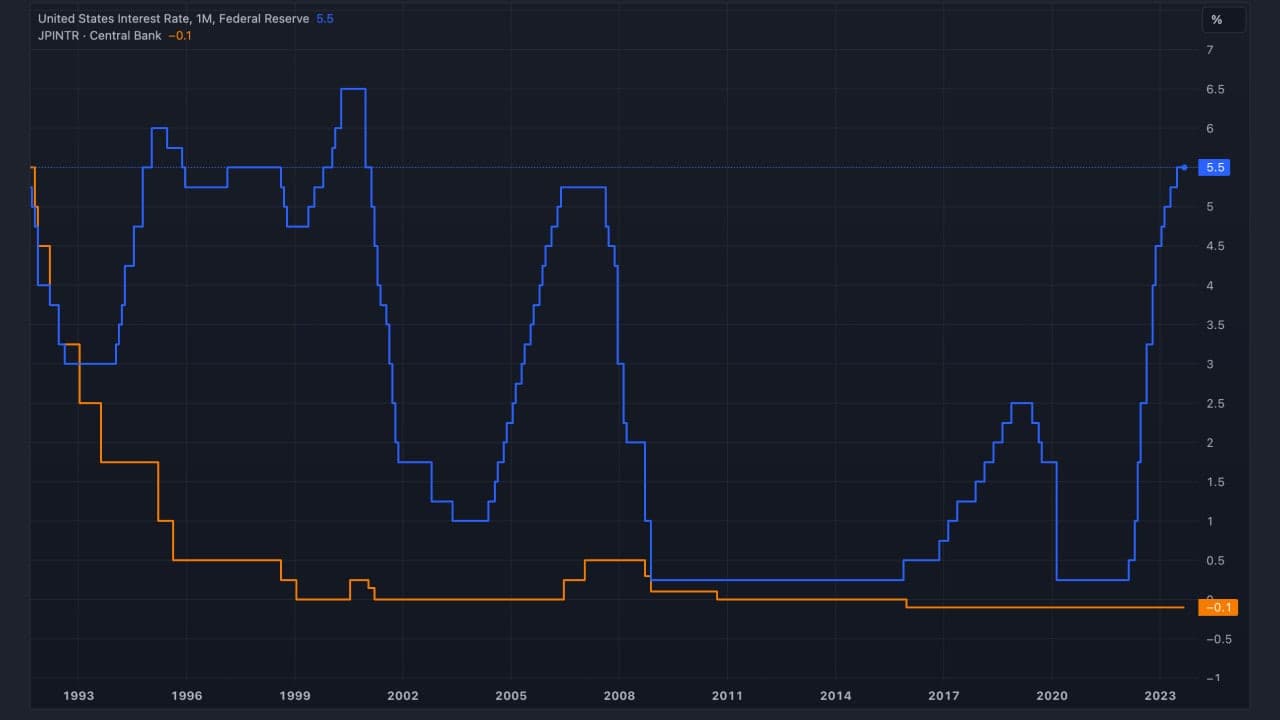
Source: TradingView
The truth of life's finiteness is not just a philosophical issue but also plays a pivotal role in finance and economics. The uncertainty of the future and the passage of time compel people to face complex financial decisions and risk assessments.
Due to the finiteness of life, people are often confronted with the choice between immediate consumption and delayed consumption. This phenomenon reveals the concept of time cost. For instance, a person might enjoy an apple today instead of saving it for tomorrow because the future is uncertain.
Interest is a reflection of the ‘time cost’ of money. It’s rooted in the idea that resources, like money, can grow over time. However, the future is uncertain, and this risk is factored into the interest charged or earned.If future growth can be anticipated, then this growth is already reflected in the current price. Therefore, interest also implies the risk of future uncertainty.
In some situations, slight fluctuations in interest rates can create arbitrage opportunities. For example, in recent years, due to Japan's negative interest rates and the United States' higher interest rates, investors often borrow in yen, convert to dollars, and earn the interest rate differential, a typical currency arbitrage strategy.
Uncertainty is a core characteristic of the financial markets. Investors, consumers, and financial institutions must evaluate the risk of future uncertainty when making every financial decision. For instance, when setting loan interest rates, banks must consider the borrower's future repayment ability and changes in the economic environment.
Understanding the impacts of life's finiteness, time cost, and future uncertainty is essential in this ever-changing and uncertain financial world. These elements shape market dynamics, investment behaviors, and the design of financial products and also affect everyone's wealth and well-being. We can make wise financial decisions, effectively manage risks, and achieve wealth appreciation by delving deeply into these factors and their interactions.
Dependence on Institutions: Examining the Relationship Between Individuals and Society
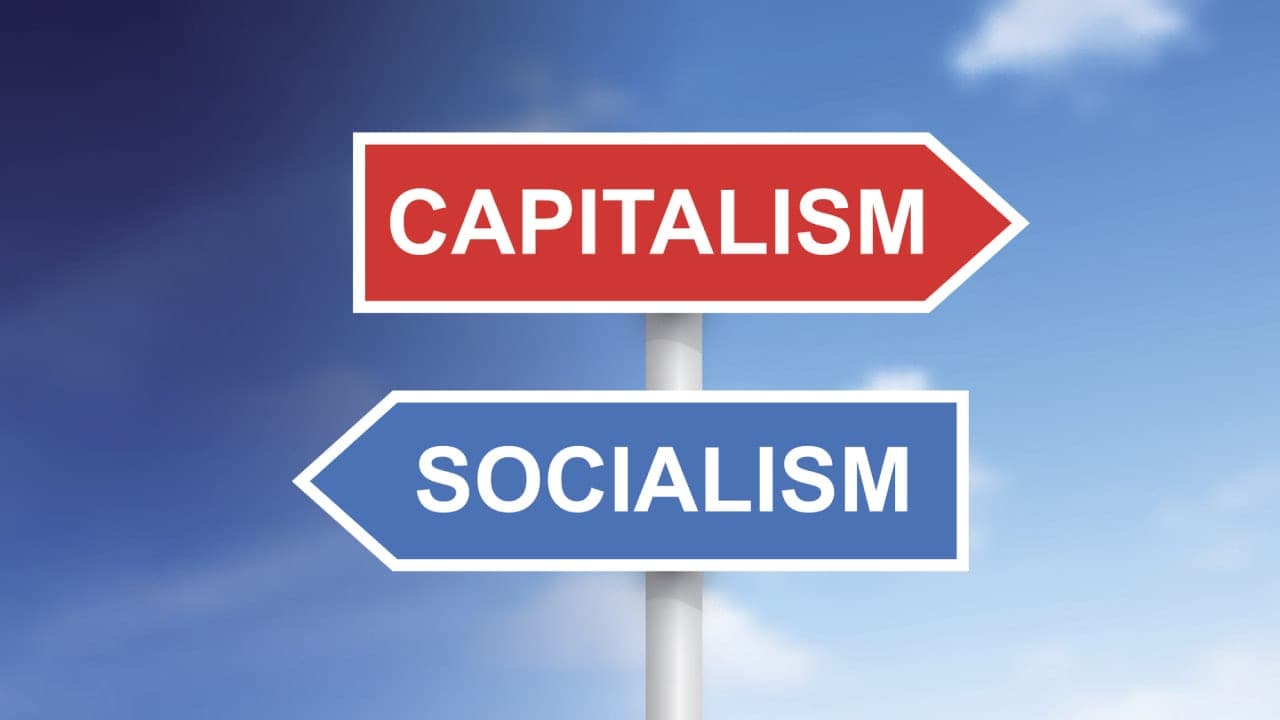
In the complex network of human society, interdependency is an undeniable reality. Individuals are not isolated; they are closely connected with others regarding resources, knowledge, and abilities. This relationship of mutual dependence has prompted the formation and development of various economic systems, each attempting to balance the needs of individuals and society in its unique way.
The diversity in economic systems reflects the global strategies employed to navigate the intricate landscape of human interdependency. Capitalism emphasizes individual freedom and private property rights, while socialism emphasizes social equality and the sharing of public resources.
- Capitalism: This system focuses on individual freedom and market mechanisms. Under capitalism, People have the right to own property, and the market, driven by supply and demand, dictates prices. For instance, the cost of a loaf of bread is determined by how many people want it and how much it is available.
- Socialism: It concentrates on overall social welfare and equitable distribution. In the socialist system, the public or state controls significant productive resources to ensure fairness and equality.
Besides capitalism and socialism, there are various mixed and variant economic systems, such as democratic socialism and national socialism. For instance, socialism with Chinese characteristics combines market economy principles with socialist principles, attempting to balance efficiency and equality.
Within these economic systems, the interaction between individuals and society becomes a key factor shaping the evolution of the systems. Each system tries to establish a balance where individuals can protect their self-interest while contributing to the overall welfare of society.
By thoroughly understanding the nature of interdependency and the diversity of economic systems, we can better grasp the complex relationship between individuals and society. This understanding offers a framework to explore how to create a more harmonious, fair, and sustainable society in a constantly changing world.
Necessity of Coordination: The Evolution and Impact of Money to Policy

Source: DALL·E 3 – 2D watercolor and ink illustration in 16:9 ratio, illustrating the assembly of a luxury sports car, with meticulous details and a clean design, reminiscent of atmospheric and educational car sketches.
Coordination becomes a central theme in a world intertwined with countless individuals and interests. From everyone's daily needs to the fluctuations of the global economy, coordination is not just a necessity but an art and science.
As a coordination tool, money allows various interests and needs to converge and exchange. For example, even in the production process of a car, individuals from different regions of the world, possessing varied technologies, backgrounds, and beliefs, must collaborate. Such cooperation isn't based on personal relationships but is facilitated through money.
Keynesianism led to the rise of macroeconomics in the 1930s. Before this, economics focused more on commercial trade and government intervention, such as mercantilism and physiocracy. However, Adam Smith's "invisible hand" theory began a new era, highlighting the free play of the market law of supply and demand.
Various economic schools of thought influence modern economics and policies. For example, Keynesianism tends to use fiscal policy to stimulate or control the economy, while the monetarist school focuses on the role of central banks. Both often exist simultaneously, collectively influencing the direction of national and global economies.
In recent years, the issue of inflation in the United States can be analyzed from the perspective of Keynesian policies. However, the country's fiscal policies, especially massive expenditures and stimulus plans, are the primary factors driving inflation. This situation underscores the central position of policy choices and coordination in economic management.
Economic coordination is not just about money and policy; it pertains to everyone's life and the future of the entire world. By delving deeper into this topic, we can better understand the multifaceted nature of economics and discover ways to maintain harmony and stability in an ever-changing world.
Conclusion: Analyzing Financial and Economic Phenomena Through Four Dimensions
In exploring economic and social phenomena, we can analyze from four key dimensions: the law of supply and demand, interest theory, the choice of financial systems, and the coordination principles of macroeconomics. Through these dimensions, we can gain a more comprehensive understanding and interpretation of the complexity and diversity of the financial and economic world.
Guided by these four elements, we can conduct deeper and broader economic and social phenomena analyses. They serve as starting points of view and discourses and are crucial frameworks for analyzing and interpreting the financial and economic world.
This analytical framework allows us to find insightful and layered perspectives among abundant data and information, further deepening our understanding of the variable and complex nature of the financial and economic world. These four dimensions serve as pillars that guide our understanding of economic phenomena. As we navigate the complexities of the financial world, how might these insights shape our future decisions and innovations?